The Mass. Lesbian Bar Story is an Anti-Woke Smear Campaign. You Fell For It.
On dyke drama, victim-blaming, and knowing thy enemy.
Dear readers,
You're reading the first ever installment of my new opinion column, where I bring a radical perspective to something we've all been talking about.
This week, I'm covering a story that never should've been told in the first place.
I. For Sale: Disabled Dyke Drama
If you were online last week, you're probably aware of the drama surrounding a certain lesbian bar, but if you're not, here's the short version:
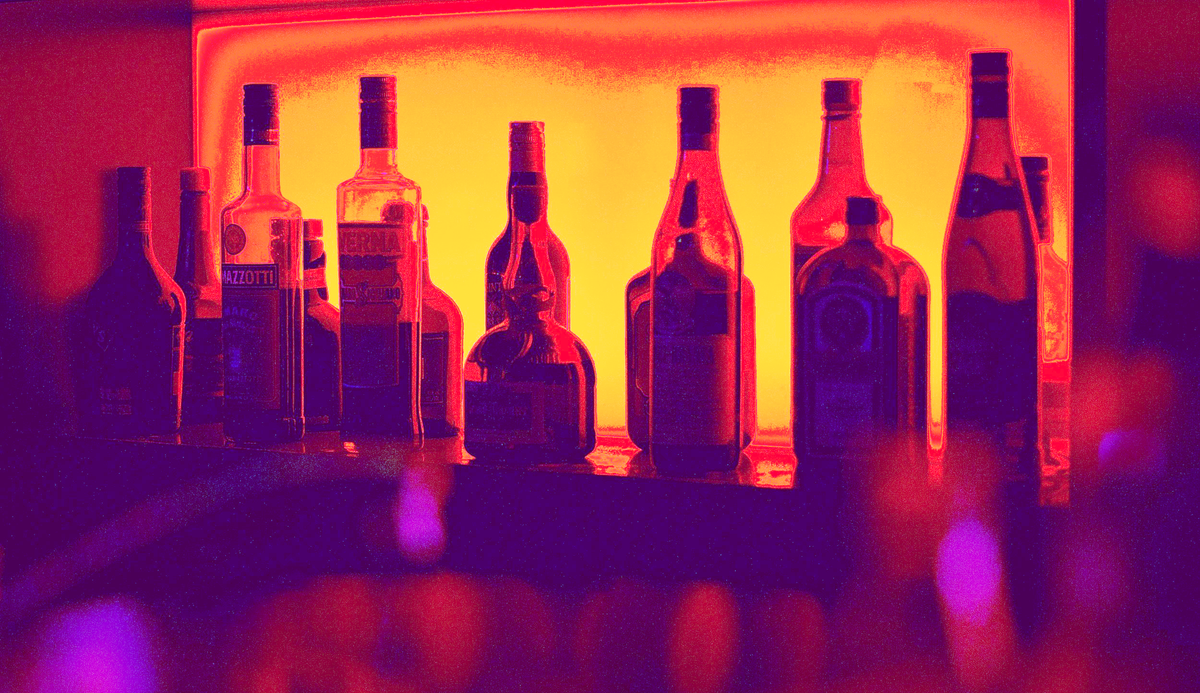
The Last Ditch Bar and Arts Venue ("Last Ditch") is a lesbian bar in Greenfield, Massachusetts, nearly 100 miles from Boston. Since opening in 2025, they've required patrons wear KN-95 respirator masks or better. Then, at the end of August 2026, the bar's management posted an update addressed to their "immunocompromised disabled divas" that stated they would be shifting to a mask optional policy for Saturday nights, citing financial struggles.
Enter The Boston Globe: Deputy Editor Annalisa Quinn wove together a torrid tale of overly cautious lesbian activists who equated the policy change with killing disabled people and, in Quinn's words, "even eugenics."
The story, published Sept. 22, captured audiences with its dry presentation of carefully curated details: the former bar owner who left to go to pursue an education at clown school, a patron's offhand remark about Lady Gaga being a Zionist, etc.
Other outlets leapt on the story, and within days, it was everywhere. There are even talks about it being adapted as a movie. My little leftist corner of Bluesky was no exception, and I watched as people, including my fellow trans journalists, eagerly got into the fray, taking the reporting at face-value.
They didn't notice that under the easy sarcasm of the story, something more sinister was happening.
Today, I'm breaking down how this viral article amplified "anti-woke" talking points, transformed victims into villains, and ultimately culminated in the racist smear of a Black lesbian.
II. Snowflakes & Firebombs
The online version of The Globe's story begins with an animation: a flurry of nasty texts that overwhelm the screen, simulating the experience of being harassed by a bloodthirsty social media mob.
One of those texts, quoted within the story's introduction, quotes a social media user, saying: "I hope your venue gets firebombed for robbing my fellow immunocompromised people of their Saturday plans just to scrape extra revenue from ablists [sic]."
The characterization is immediate and powerful. Violent disabled people, it says, want to kill the lesbians who run this already-very-mask-friendly bar. The reporting never identifies that user, though.
Instead, after giving some background on the bar, it segues into introducing Soe Noire, a Black artist and community organizer who's previously performed at the bar. It identifies Noire as someone who's been "posting complaints about Last Ditch for days," and goes on to detail how he (along with other critics) "derailed" a community meeting, by "flood[ing] the Zoom chat with irate messages."
Over and over again, Quinn characterizes Noire as angry, irrational, and unreasonable. Later, he's quoted mocking the "WHITE THEY THEM TEARS" of Jackie Matellian, the bar's owner, who cried during the meeting. The article treats him as the ringleader of a homophobic hate mob, ruining a space because it's not perfect enough.
But Noire wasn't invading or derailing anything. Noire, who uses he/him pronouns, is a gender-expansive lesbian, and according to the article, he'd performed regularly at the bar. He clarified online that the meeting was framed as an "accountability meeting," and that understanding is supported by the Globe's reporting, which noted two mediators were present.
He was an actively invested member of the affected community and a supporter of the bar's project. He was sharing his grievances in a space explicitly intended for them.
The Globe had their villain, though.
It's no wonder, then, that people associated Noire with the firebombing comment and called the police on him. (Noire did not leave the firebombing comment.)
Let's sit with that for a second: The Globe's journalism resulted in people calling the police on a Black GNC lesbian for a crime he did not commit.
It was so bad that eventually, the bar posted a plea for people to stop harassing Noire, directly reiterated that he did not threaten to firebomb the bar (or mock the owner for being homeless, or call for the shutdown of the bar.) "As a result of this abysmal journalism," they wrote, "Soe has been getting additional threats, slurs, and harassment, and now he is being reported to the police over something he did not do." Last Ditch went so far as to link Noire's Venmo, saying, "This is...at its core, anti-blackness hysteria."
They're right.
III. It's Anti-Woke o' Clock Again
The Globe doesn't only smear Noire, though. Instead, Quinn uses him and other critics of the policy as proxies to create a larger perceived threat: the remnants of so-called woke ideology.
The identities of the community members are treated as suspect at best, their emotions painted in the brush of doubt from the start. Noire "identifies as" a gender-expansive lesbian. One person, "going by moss" catches heat for asking if the mediators, as licensed therapists, are mandatory reporters with the power to have members of the group involuntarily institutionalized.
The piece is full of snarky asides about how masking is unnecessary, despite the practice's proven health benefits. Quinn notes Greenfield has had 0 reported COVID cases, seemingly referencing Massachusetts' COVID-19 dashboard.
But that dashboard explicitly clarifies it is only counting reports from those administered a test by a healthcare provider. Anyone who only took an at-home test wouldn't be included. Anyone with an asymptomatic case of COVID – thus, someone who likely wouldn’t have a reason to get tested – wouldn't be included.
In fact, Quinn's offhand, out-of-context use of this statistic directly contradicts what we know now. According to the CDC, Massachusetts is one of 12 states reporting "moderate, high, or very high" levels of COVID activity as the "summer surge" begins. COVID cases around the U.S. are rising.
Carefully, the piece curates an image, cherrypicking details and lightly deriding these subjects, while making sure you don't seriously engage with their thoughts.
Matellian's story is framed as one deserving of sympathy: the 26-year-old white lesbian and business owner, thrust into the position through no fault of her own, trying her best to placate the woke mob. Matellian is thoroughly interviewed, quoted in full sentences when telling her story.
Noire and other critics' words are fragmented, angry; they rarely get to explain their perspective outside of the realm of their quoted social media posts and words at what was intended to be an accountability meeting: a place explicitly intended for their grievances.
By virtue of their very identities, they're presented as unreasonable: the paranoid COVID masker, the angry Black lesbian, the oh-so-sensitive tenderqueer. These stereotypes permit the reader to dismiss the points being made without consideration.
But it's not enough to just think these people are a joke.
IV. The Protest Paradigm
Instead, the story wants you to think they are evil, dangerous, and even violent.
The firebombing quote gives the game away.
None of the other messages displayed in The Globe's animation are threatening. One comment reads, "it feels wildly insensitive and dismissive :(" and another says, "if you spread diseases that disable and kill, you do not 'love me.'"
Those comments are not pleasant ones. But they certainly aren't violent. They aren't even rude, really. They might, in fact, make you empathize with this story's so-called villains.
But The Globe got the worst of the worst and used it as a brush to transform the bar's community into a hysterical, blame-worthy symbol of activists on the left.
The news often portrays activists as violent, to the point that this phenomenon has a name: the protest paradigm. For decades, media research has shown mainstream news organizations are structurally hostile to activists who intend to challenge the status quo and are specifically more favorable to conservative protesters. These portrayals serve to further marginalize already marginalized voices. They also tend to focus on the tactics and often fail to cover the context.
This is, at its core, a type of tone-policing: a practice of victim-blaming where oppressed people are judged on their reactions to unjust circumstances, not their actions. Black Lives Matter protesters were rioters. The maskers left disparaging comments on social media.
During the era the establishment has now dubbed "Woke 1," conservatives panicked as movements like #MeToo and Black Lives Matter gained collective power and traction.
In the resulting years, they've done their best to delegitimize, criminalize, and stamp out those movements, disassociating them with their original purposes and meanings. Wokeness itself is a term stolen directly from the Black liberation movements, and it's now frequently appropriated as a catch-all to demonize any kinds of social justice activism.
The Globe's story forms a similarly oppressive message.
Don't believe me? The Washington Post was kind enough to just come out and say it in an op-ed headline: "The Great Awokening Is Over. This Lesbian Bar Shows Why."
Far-right outlets like The Free Press and the New York Post, too, have covered this story with glee, taking a near-identical tack.
While the message may be transformed slightly for mainstream, supposedly liberal outlets, the core function of the narrative is the same.
This story's agenda is undeniable. If you’re still doubting it, all you need to do is look at its origins. Before The Globe covered this story, it was career anti-trans journalists Jesse Singal and Katie Herzog who broke the story on their obnoxious podcast.
Herzog and Singal, it should be obvious, do not care about Metallian or the lesbian community. Singal recently posted data that he seems to think implies queerness (not just transness) is spread via social contagion, a throughline bigots have been using for decades to legislate queer people out of public life. These are people who have built their sad, Twitter jagoff careers on eradicating queer youth.
And that far-right agenda had mainstream outlets falling in step, printing pieces with the same eliminationist message. Through politer language and distance, and their faux concern for the involved lesbians, they launder the real message: Sit down, shut up, and take it.
They tell you that marginalized people are your enemy.
V. Know Thy Enemy
It worked. Even in progressive circles, people amplified this harmful message. They fed into its power, and in doing so, they fueled real harms on immunocompromised and disabled communities, beyond what happened to Last Ditch and Noire.
In one Bluesky thread, filmmaker Jessica Ellis detailed her experience with long COVID and rebuked the popularity of the article.
She wrote: "The only thing Covid conscious people are trying to do, truly, is not get sick. That we’ve become the country’s newest freak show is predictable given the pandemic, but truly despicable on a base human level." Downthread, she asked: "Should I really have to risk my life to sit at a bar or buy a book?"
This isn't about blame. The opposite, in fact. It's about learning from our cannibalistic approach on the left to bad-faith news like this and not repeating that behavior because I want us to win.
I want queer liberation. I want free healthcare. I want survivors to get justice. I want a politic that treats every single person as a human being worthy of dignity.
And this? This thing where we eat up whatever bullshit of the week the media feeds us uncritically? This is not a winning strategy.
So next time you see something like this on your feed, instead of getting enraptured by the outrage of the day, the token uppity minority, take a step back. Think about if the story really matters to you. If it has the capacity to change anything for the better. And if it doesn't, maybe find one that does to share instead.
It won't fix everything. But it's a start.
So, my dear queers, leftists, and radicals, I implore you: Can we please, dear God, lock the fuck in?
I don't want to see you posting about the lesbian bar.
I want to see you at the protest.
Want more of The Backbone News?
If you enjoyed this piece, make sure to subscribe for free so you can get my journalism in your inbox.
If you want to read more commentary like this, you can join TBN's paid tier to unlock access to all future commentary pieces, as well as the ability to comment on the site, for only $5/month.